

If you have seen a mosquito control truck in your neighborhood or received a notice that your county health department is treating for mosquitoes, a reasonable question follows: if the county is already treating, why would you need mosquito control at your home?
The answer is straightforward. County programs and residential treatments are not doing the same thing. They operate at different scales, target different locations, and solve different parts of the problem. Understanding the distinction explains why one does not replace the other.
What County Mosquito Control Actually Does
Local mosquito control programs focus on community-wide mosquito populations and public health, not individual properties. Depending on current mosquito activity and surveillance data, these programs typically:
- Monitor mosquito populations through trapping and field testing
- Test mosquitoes for diseases including West Nile virus
- Identify large-scale breeding areas such as drainage ditches and retention ponds
- Treat standing water where mosquito larvae are actively developing
- Conduct area-wide treatments when surveillance identifies elevated risk
These efforts reduce mosquito populations at the neighborhood and community level. They are an important part of public health management. They are not designed to address the specific conditions around your home, your landscaping, your yard drainage, or the shaded areas where mosquitoes rest between feedings.
For a broader look at what mosquito and tick season looks like throughout the year and what to expect month by month, see our guide to mosquito and tick season in Central Ohio.
What Residential Mosquito Control Does Differently
Mosquitoes spend the majority of their time resting, not flying. They rest in cool, shaded, protected areas including dense shrubs, landscaping beds, under decks, around fence lines, and in areas with heavy ground cover. These resting sites are specific to your property and invisible to a neighborhood-wide treatment.
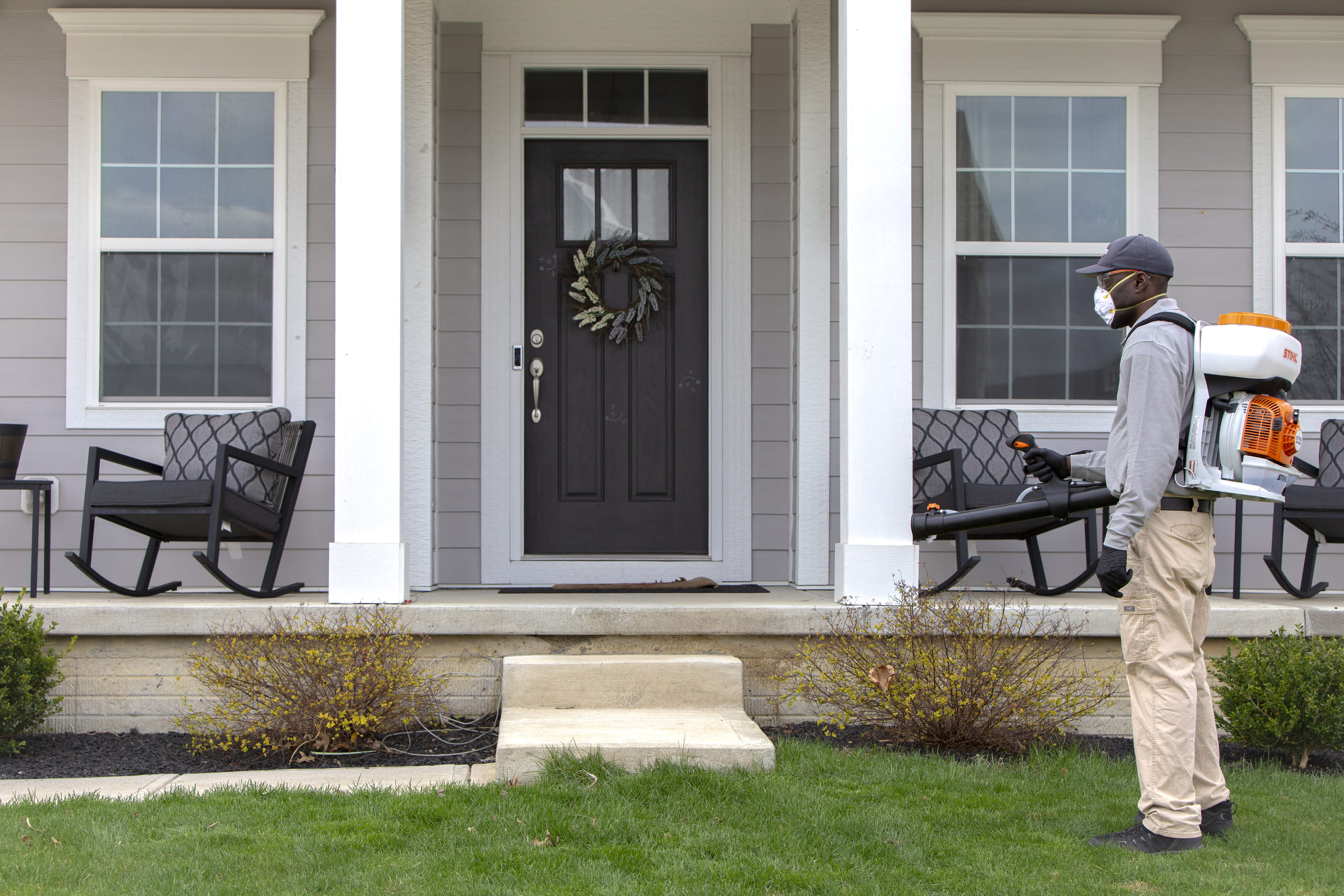
Residential mosquito control focuses on exactly those locations. A trained technician examines the conditions around an individual property, identifies where mosquitoes are resting and breeding, and applies targeted treatment to those specific areas rather than treating an entire block the same way.
The result is a significant reduction in mosquito activity in the outdoor spaces you actually use, which is something a county program is not designed to deliver.
Why You Can Still Have Mosquitoes After a County Treatment
A community-wide treatment reduces the overall mosquito population in an area. It does not eliminate every mosquito or address every condition on your specific property.
Several factors mean mosquito pressure at your home can remain high even after a neighborhood treatment:
Mosquitoes move. They migrate from neighboring properties, wooded areas, and untreated zones. A treated street does not create a barrier that prevents new mosquitoes from entering your yard.
Breeding happens at the property level. Gutters, planters, low spots in the yard, tarps, and decorative containers collect standing water that sustains local mosquito reproduction independent of anything happening at the neighborhood scale.
Resting sites are property-specific. The dense landscaping along your fence line or the shaded area under your deck is not covered by a truck driving down the street.
This is why mosquito management is not a one-and-done process, and why community and residential approaches complement rather than replace each other.
Why Recurring Treatments Matter
Conditions around a property change constantly throughout the season. Rainfall creates new standing water. Vegetation grows and provides new resting areas. Mosquitoes continue emerging and migrating from surrounding areas throughout summer regardless of what treatments have been applied.
A single treatment reduces mosquito pressure significantly. It does not hold indefinitely. Recurring treatments allow conditions to be reassessed and addressed on an ongoing basis during the months when mosquitoes are most active, keeping pressure consistently low rather than spiking between treatments.
Think of it less as building a permanent barrier and more as consistently managing the environment mosquitoes need to thrive.
What Homeowners Can Do to Help
Professional treatment addresses resting sites and active mosquito populations. Homeowners control the breeding conditions that sustain those populations between treatments. Both matter.
The most impactful steps are straightforward:
- Empty any container that collects rainwater, including toys, buckets, and tarps
- Refresh birdbaths and pet water at least twice a week
- Keep gutters clear and draining fully after rain
- Check planters and outdoor furniture for trapped water after storms
- Trim back dense vegetation around patios, decks, and outdoor seating areas
- Address any drainage or moisture issues in the yard when possible
Mosquitoes do not need a pond to breed. Any container that holds water for more than a week can produce a new generation. Small, overlooked sources are often the biggest driver of sustained mosquito activity around a home. For a full breakdown of what to address and when, see our mosquito prevention tips for your backyard.
What We’re Seeing This Season
Mosquito activity doesn’t necessarily end when summer begins winding down. Warm temperatures, rainfall and standing water can keep mosquito pressure high well into September, particularly in yards with mature landscaping, shaded resting areas and limited air circulation around outdoor living spaces.
We’re also seeing situations where homeowners assume county treatment should eliminate the mosquitoes around their home, only to find that activity remains because resting and breeding conditions specific to their property haven’t been addressed.
Mosquitoes are not the only pest peaking right now. For a full picture of what is active this time of year and what to watch for around your home, see our outdoor pest activity guide.
County treatment and residential treatment together produce noticeably better results than either approach alone.
When to Schedule Residential Mosquito Treatment
Consider scheduling service if:
- Mosquitoes are making your yard, patio, or deck difficult to use in the morning or evening
- You have seen county treatment in your neighborhood but are still experiencing high mosquito activity
- You have standing water issues or dense landscaping that creates consistent resting conditions
- You want to maintain lower mosquito pressure throughout the full active season rather than reacting after activity becomes disruptive
How Champion Pest & Termite Control Approaches Mosquito Management
At Champion Pest & Termite Control, every mosquito service follows our 3E Proven Process.
We start with Examine. We inspect the property for active mosquito resting sites, potential breeding areas, standing water sources, and vegetation conditions that are sustaining mosquito pressure. The goal is understanding why mosquitoes are present at your specific property, not just treating the symptom.
Then we Explain. We walk you through what we found, why it is contributing to mosquito activity, and what the treatment plan addresses. We also identify what you can do between treatments to reduce breeding conditions and improve results.
Then we Execute. We apply targeted treatment to resting areas, breeding sites, and the conditions specific to your property, not a one-size-fits-all neighborhood approach.
If mosquitoes are making your yard harder to enjoy this summer, we are ready to help. Schedule service now and get consistent mosquito management through the rest of the active season.
Frequently Asked Questions
If the county is treating for mosquitoes, do I still need residential treatment?
Yes. County programs address mosquito populations at the community level, targeting large breeding areas and reducing overall numbers across a neighborhood. They are not designed to treat the resting sites and breeding conditions specific to your property. Both approaches serve different purposes and work better together than either does alone.
How long does a residential mosquito treatment last?
Results typically hold for three to four weeks depending on rainfall, temperature, and how quickly vegetation and standing water conditions reset. Recurring treatments through the active season maintain consistent pressure reduction rather than allowing activity to rebuild between applications.
What attracts mosquitoes to my yard specifically?
Standing water is the primary breeding driver. Shaded, cool resting areas in dense landscaping, under decks, and around fence lines sustain adult mosquito populations throughout the day. Properties with mature landscaping, poor drainage, or any container that regularly holds water tend to have higher sustained mosquito pressure than more open, well-drained yards.
Can I reduce mosquito activity without professional treatment?
Removing standing water and trimming dense vegetation reduces breeding and resting conditions significantly. It does not address an already-established adult population or resting sites in areas that are difficult to access. For a full comparison of what DIY approaches can and cannot accomplish, see our post on whether DIY pest control is as effective as hiring a professional. Professional treatment combined with homeowner maintenance produces the most consistent results.
Does rain wash away mosquito treatment?
Heavy rain shortly after treatment can reduce its effectiveness. Most professional-grade products used on vegetation are designed to bind to plant surfaces and maintain some residual activity after light to moderate rain. Your technician can advise on timing and whether a follow-up application is warranted after significant rainfall.
Is mosquito treatment safe for children and pets?
Professional mosquito treatments applied by a licensed technician use products and application methods that follow EPA label requirements for residential use. Your technician will advise on any re-entry intervals specific to the products used at your property. For more detail on how professional pest control products are handled around families, see our post on whether pest control is safe around children and pets.
Recent Comments