


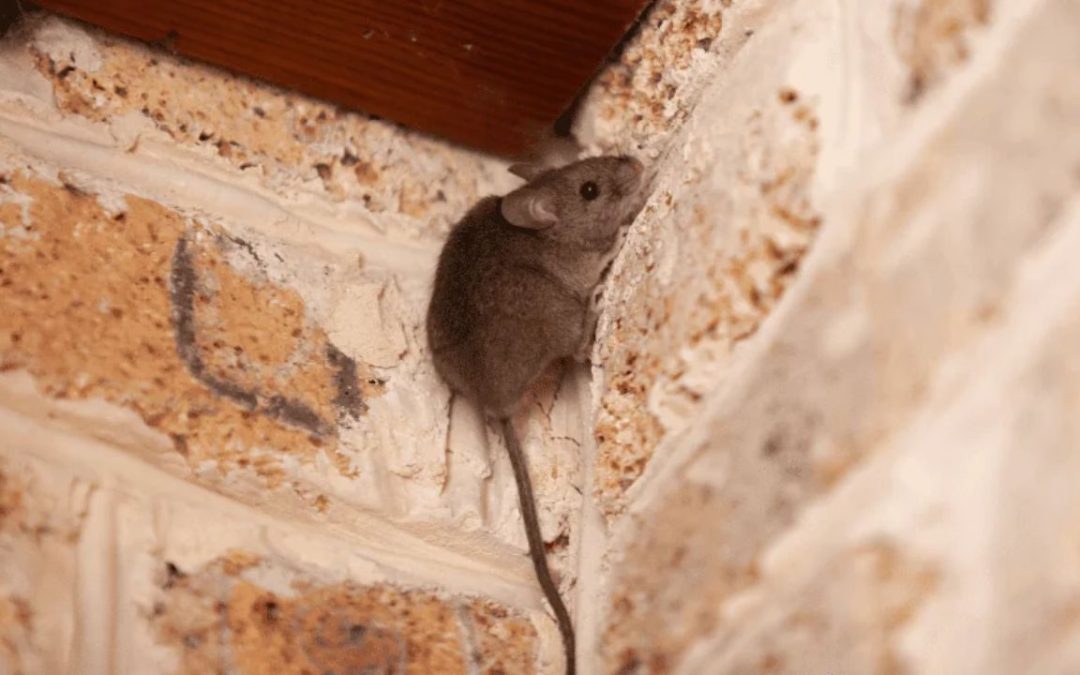
The Short Answer
The most common signs of mice in a home are droppings, scratching or rustling sounds at night, chewed food packaging, gnaw marks, and shredded nesting material. Mice do not hibernate, so activity continues all winter. If you find signs in more than one area of the house, mice are likely established inside and a professional inspection is the next step.
Quick Signs Checklist
- Droppings in cabinets, drawers, garages, or along walls
- Scratching or rustling after the house gets quiet
- Chewed or torn food packaging
- Gnaw marks on wood, cardboard, or stored items
- Shredded paper, insulation, or fabric in a protected corner
- A pet fixated on one wall, cabinet, or appliance
Why Do Mice Come Inside in Late Fall?
Mice come inside in late fall because a home offers what they need and outdoor conditions stop providing it. Natural food sources become less reliable, temperatures drop, and the steady warmth inside a structure becomes the better option.
Mice do not hibernate. Once inside, a mouse does not find a quiet corner and waits for spring. It keeps eating, gnawing, and building nests. That activity is what leaves the evidence most homeowners notice first.
The tricky part is that mice are secretive. They move behind appliances, inside lower cabinets, along wall edges, and through garages and basements. You can have an active problem without ever seeing a mouse. For a broader look at how other pests behave as temperatures drop, see our guide on overwintering pests and what happens in fall.
What Are the Signs of Mice in a House?
The first sign of mice is usually something small, not a live mouse. Droppings, sounds, chewed packaging, and gnaw marks show up first, and no single sign tells the whole story. What matters is the pattern: where the evidence appears, how often, and whether new signs keep showing up.
In our inspections, the first clue is almost never a mouse sighting. It is a dropping in a pantry corner or a sound in the wall at night that a homeowner has been explaining away for a week or two.
Where Should I Look for Mice Inside My Home?
Start with the places mice use most: behind appliances, inside lower cabinets, garages, basements and attics, and along wall edges. Here is what to check in each.
Behind and Under Appliances
Kitchens offer warmth, moisture, and food. Check behind and beneath refrigerators, stoves, and dishwashers for droppings, gnaw marks, or nesting material. Mice often travel along the back wall of a cabinet run rather than across an open floor.
Inside Lower Cabinets and Pantries
Look for damaged packaging, droppings in corners, and disturbed stored items. Pet food, birdseed, and bulk dry goods in soft or loose containers are especially attractive. Moving them into sealed hard containers removes a major food source.
Garages
Garages are quieter and less disturbed than living areas. Cardboard boxes, bags of grass seed, clutter along walls, and open trash create shelter and food close to entry points. Droppings in a garage are worth taking seriously even if the house looks clean.
Basements, Crawl Spaces, and Attics
These spaces get the least foot traffic, so activity can continue unnoticed for weeks. Check perimeter walls, pipe penetrations, and any insulation that looks compressed or disturbed.
Along Walls and Baseboards
Mice prefer protected routes over open space. Droppings and grease marks tend to appear along walls, behind stored items, and in corners. The path of the evidence often shows how mice move between shelter, food, and water.
How Can I Tell If Mouse Droppings Are Fresh?
Fresh mouse droppings are dark, soft, and moist. Older droppings are dry, gray, and crumble easily. To confirm current activity, clean the area and check again in 24 to 48 hours. New droppings mean the activity is ongoing.
Droppings do not always show where mice are nesting. Mice travel repeatedly along established routes, so droppings tell you about movement patterns more than nest location.
Safety First: Do Not Sweep or Vacuum Droppings
Dry sweeping or vacuuming can send contaminated particles into the air. Wear gloves, spray the area with disinfectant until it is wet, wait a few minutes, then wipe it up. If contamination is extensive, get professional guidance before disturbing the area.
What Does Scratching in the Walls at Night Mean?
Scratching or rustling after the house goes quiet usually means a mouse is active nearby. Mice are more noticeable at night because there is less human activity, not because they only come out then.
The sound can seem to come from walls, ceilings, attics, cabinets, or behind appliances. Building materials carry sound, so where you hear it is not always where the mouse is nesting. That is one reason an inspection covers more ground than following the noise.
Why Do Mice Gnaw on Things That Are Not Food?
Mice gnaw because their teeth never stop growing, and chewing keeps them worn down. That means damage can extend past food packaging to cardboard, wood, insulation, stored belongings, and sometimes wiring. Gnaw marks on non-food items also help trace the routes mice are using through the structure.
If I See One Mouse, Are There More?
Not automatically, but one mouse always means one thing: there is an entry point. A single sighting does not confirm a major infestation. It does confirm that a mouse has access to the structure.
The useful questions from there are where it is traveling, what other evidence exists, how long the activity has been going on, and how it got in. A female mouse can have six to ten litters a year with five to six pups each, and those pups can start breeding at around six weeks. A pair that moves in during October can become a much larger population by January if the entry point stays open.
What Should I Do in the First 48 Hours If I Suspect Mice?
- Look for evidence, not just mice. Check behind appliances, in lower cabinets, and along garage walls.
- Clean up droppings safely. Use gloves and disinfectant, never a vacuum or broom.
- Recheck in 24 to 48 hours. New droppings confirm active mice.
- Secure food. Move pet food, birdseed, and dry goods into sealed hard containers.
- Reduce clutter. Clear cardboard and stored items from garage and basement walls.
- Note where evidence appears. Locations and dates help a technician find the entry point faster.
- Call a professional if signs continue. Trapping a mouse does not tell you whether more are inside.
What We're Seeing This November
Rodent calls are climbing as temperatures drop. Activity is concentrated around garage thresholds, utility penetrations, and lower kitchen cabinets. Homes where entry points were sealed in September and October are reporting far less interior activity than homes where exclusion work was skipped.
A mouse that got in during late October has had weeks to move through the structure. Acting this month still closes the window on bigger problems heading into winter.
When Should I Call a Professional for Mice?
Call a professional if you are dealing with any of the following:
- Droppings in more than one area of the home
- Ongoing scratching or movement sounds inside walls or ceilings
- Chewed packaging, gnaw marks, or nesting material inside the structure
- A mouse sighting anywhere in the home or attached garage
- Traps have caught mice but activity continues
- You cannot find where mice are getting in
A professional inspection goes beyond where the mouse was seen. The goal is to find where mice are active, what they are feeding on, where they are nesting, and how they are getting in. That full picture is what makes rodent control last. For more on closing off access points, see our guide to protecting your home from rodents, or our 10 steps to get rid of mice.
How Does Champion Pest & Termite Control Handle Rodent Problems?
At Champion Pest & Termite Control, every rodent service follows our 3E Proven Process.
We start with Examine. We inspect the property for droppings, gnaw marks, travel routes, potential nesting locations, and the conditions feeding the problem. We look beyond where the mouse was seen because the visible evidence often tells only part of the story.
Then we Explain. We walk you through what we found, where activity is concentrated, what is attracting or supporting the mice, and whether the activity is current. You understand the why before any treatment begins.
Then we Execute. We build a rodent control strategy around your specific property and the activity we find, addressing both the active problem and the conditions that allowed it to start.
If you are seeing signs of mice this fall, do not wait to see if it resolves on its own. Schedule service now and get a clear picture of what is happening inside your home. For more on how late summer pest movement sets this up, read why pests start moving indoors in late summer.
Frequently Asked Questions About Mice
Are mice only a problem in fall and winter?
No. Mice are active year-round. Fall and winter make activity more noticeable around structures, but a mouse that has settled indoors stays active in any season.
Why do I hear mice at night but not during the day?
Mice are more noticeable when the house is quiet. Sounds from walls, ceilings, and cabinets are easier to hear at night. Silence during the day does not mean activity has stopped.
Does finding mouse droppings mean I currently have mice?
It means a mouse has been in that spot. Fresh, dark, soft droppings point to current activity. Clean the area and recheck within 48 hours to confirm.
Should I vacuum mouse droppings?
No. Vacuuming or dry sweeping can make contaminated particles airborne. Wet the area with disinfectant first, then wipe it up wearing gloves. For heavy contamination, get professional guidance.
If I catch one mouse in a trap, is the problem solved?
Not necessarily. Keep watching for new droppings, gnaw marks, and sounds. Catching one mouse without sealing the entry point leaves the door open for more.
Can mice cause damage beyond contaminating food?
Yes. Mice gnaw on cardboard, wood, insulation, and stored items, and they can chew wiring, which creates a fire risk.
What is the most common place technicians find mouse activity during a fall inspection?
Kitchens and garages. In kitchens, activity concentrates behind the refrigerator and along the back wall of lower cabinets, especially near gaps where water lines or drains enter through the floor. In garages, evidence tends to show up along the wall closest to the exterior door, particularly where pet food, birdseed, or cardboard is stored. Living areas are often the last place activity appears, not the first.
How quickly can a mouse problem grow if it goes unaddressed?
Quickly. A female mouse can produce six to ten litters a year, and her pups can breed within about six weeks. A pair that enters in October can mean a significantly larger population by January if the entry point stays open.
What is the difference between a mouse entry point and a travel route?
An entry point is where mice get into the structure, such as a gap around a pipe, a damaged door sweep, or a foundation crack. A travel route is the path they use once inside, usually along walls, behind appliances, or through wall voids. Most homeowners only find evidence along travel routes, so treating there without sealing the entry point gives temporary results at best.
Recent Comments